Powerful Assets for Force Protection
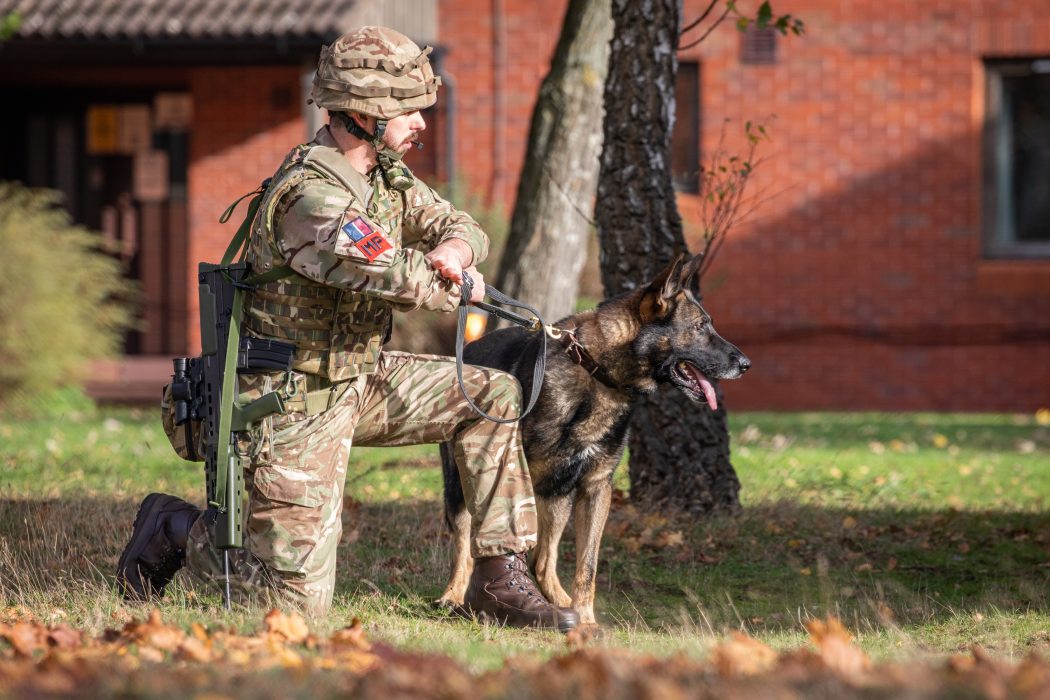
The bond between humans and dogs has a deep-rooted history, dating back thousands of years. Today, the Royal Air Force (RAF) uses this bond to its operational advantage its Military Working Dogs. Initially formed in 1942 as the Ministry of Aircraft Production Guard Dog School, the RAF’s dog teams have evolved over time to protect high-value military locations, assets, and personnel. With approximately 180 dogs and 135 handlers, each dog team contributes the equivalent of eight to 15 personnel.

© MOD/Crown.
The Military Working Dogs’ work can be categorised into two types: detection and protection. These highly versatile canines are trained not only for detecting explosives, arms, vehicles, and drugs but also for providing protection and assistance to their handlers. They can locate missing individuals, including those with mental health issues, and alert their handlers to the presence of intruders. The dogs’ exceptional senses allow them to search large open areas, woodlands, and buildings efficiently.
Training plays a crucial role in developing these skilled canines. The Ministry of Defence conducts phase one training at the Defence Animal Training Centre, followed by specialised training lasting between 12 weeks to six months. The handlers also undergo intensive training to ensure the success of their partnerships with the dogs. Regular testing and participation in Military Working Dog trials maintain the teams’ high standards.
RAF dog teams are not limited to serving within the UK. They are prepared to work overseas, adapting to different environments and scenarios. The RAF acquires dogs from the Netherlands, primarily utilising shepherd breeds such as German Shepherds, Belgian Shepherds, Dutch Shepherds, and Malinois for tracking, pursuing, and protecting. For detection purposes, gundogs like Springer Spaniels, Cocker Spaniels, German Short-Haired Pointers, and Labradors are employed.

© MOD/Crown

© MOD/Crown
Throughout their service, the dogs live in RAF kennels and receive meticulous care from Kennel Assistants. When their careers come to an end, efforts are made to retire them to suitable homes where they can live out their days comfortably. Ex-RAF canines retire with their handlers whenever possible, but those needing re-adjustment training are exposed to civilian environments to ensure a smooth transition.
The RAF’s commitment to its Military Working Dogs extends beyond their active service. The annual UK Military Working Dog Trials provide a platform for RAF Police and their dogs to demonstrate their capabilities and compete for recognition. The trials include various operational scenarios, emphasising agility, obedience, and tracking skills. These competitions foster teamwork and inspire the next generation of RAF handlers.
The RAF’s Military Working Dogs serve as invaluable assets, supporting the protection and enablement of Air and Space Power. With their extraordinary sensory abilities, they exemplify the bond between handlers and their dog companions while upholding the RAF’s core values.
© MOD/Crown

© MOD/Crown
Air Mail
This article has been adapted from the January 2023 edition of Air Mail magazine which looked at Animals in the RAF. To receive Air Mail, which is the RAF Association’s quarterly members’ magazine and looks at all aspects of the RAF’s work, now and since it was founded, become a member and opt for Air Mail as part of your membership.